
24 Mar The historical importance of the centenary of Saint Veronica Giuliani
The passing of centuries doesn’t seem to dim the light emanating from the great mystics. Within the landscape of Christian spirituality, the centenary of Saint Veronica Giuliani represents a moment of deep reflection that goes far beyond mere ritualistic commemoration.
Celebrating a centenary tied to such an extraordinary figure isn’t simply about looking back at a person from the past with academic admiration; it is about recognizing that saints are witnesses to a life fulfilled through the Gospel—figures who remain alive and active within the fabric of contemporary faith. The historical significance of this anniversary lies in its ability to bring the story of Saint Veronica Giuliani back into the public eye, highlighting a human and spiritual journey that has left an indelible mark on the city of Città di Castello and the entire Order of Capuchin Poor Clares.
In an age that often loses its sense of memory, this centenary serves as a “Time of Grace.” It offers a unique opportunity to draw near to a Gospel witness that remains fruitful precisely because it is deeply rooted in the mystery of Christ. This celebration is not just about a date on a calendar; it is about the living presence of a community of nuns who, in the very place where Veronica lived, continue to safeguard her historical and spiritual memory. During this period, doors that are usually closed by the rules of enclosure are opened both symbolically and physically, allowing the faithful to access sacred spaces such as the cell of the stigmata or the room where the Saint concluded her earthly journey. In this way, the centenary experience becomes a truly tangible encounter with holiness.
Who was the ‘Spouse of the Crucified’? A brief historical overview
To fully grasp the magnitude of this centenary, it is essential to trace Saint Veronica Giuliani’s story back to its very roots.
Born Orsola Giuliani in Mercatello sul Metauro on December 27, 1660, she was raised in an affluent and well-respected family. Her father, Francesco, commanded the local military garrison, while her mother, Benedetta Mancini, became the first to nurture her daughter’s vocation. A pivotal moment of her childhood occurred at her mother’s deathbed: Benedetta entrusted each of her five daughters to one of the five wounds of Christ. To Orsola, then only six years old, fell the wound in His side, along with the blessing that she might dwell forever within the Heart of God.
This spiritual commission became the compass of her life. Orsola was no ordinary child; from her earliest years, she spoke of visible encounters with Jesus and Mary. With childhood fervor, she would stack chairs and stools to reach their sacred images just to kiss them, completely undeterred by the resulting falls. Her iron will became evident when, as a teenager, she stood firm against her father’s wishes; seeing her as his favorite, he sought to steer her toward a worldly life and marriage. Yet, nothing could sway her from her purpose. On October 28, 1677, Orsola entered the monastery of the Capuchin Poor Clares in Città di Castello, taking the name Veronica.
Life within the monastery walls for Saint Veronica was a tapestry of rigor, humility, and profound mystical phenomena. Though her strong personality occasionally led to friction with her fellow sisters, she was defined by her absolute devotion. At just twenty-eight, she was appointed Mistress of Novices—a role she embraced with infectious joy. She was known to chase crickets in the garden to delight the young novices, all while remaining a paragon of self-discipline. The pinnacle of her mystical journey was reached on April 5, 1697, when she received the stigmata, becoming a living image of the Crucified Christ.
Despite the harrowing trials and humiliations she endured during inspections by the Holy Office—which temporarily stripped her of all authority—Veronica displayed heroic charity. Following her rehabilitation, she was elected Abbess in 1716, proving to be a remarkably practical administrator: she oversaw the construction of new cells, modernized the monastery with water plumbing, and engineered a pulley-operated well to ease the sisters’ daily labors.
Yet, her most enduring legacy remains the 22,000 pages of her Diary. Written in obedience to her confessors, it stands as one of the towering achievements of world mystical literature. She passed away on July 9, 1727, leaving behind her famous spiritual testament: “I have found Love! Tell it to everyone.”
The context of the centenary: why this anniversary matters
A natural question arises: why do the Church and the community devote such energy to celebrating the centenary of Saint Veronica’s passing?
The answer lies in the cyclical nature of memory as it transforms into a living presence. In Catholic tradition, the centenaries of a saint’s birth or death are milestones that allow their message to be revitalized for new generations. Looking back at the timeline of celebrations dedicated to Saint Veronica, we can see how each milestone has marked a step forward in the growth of her devotion.
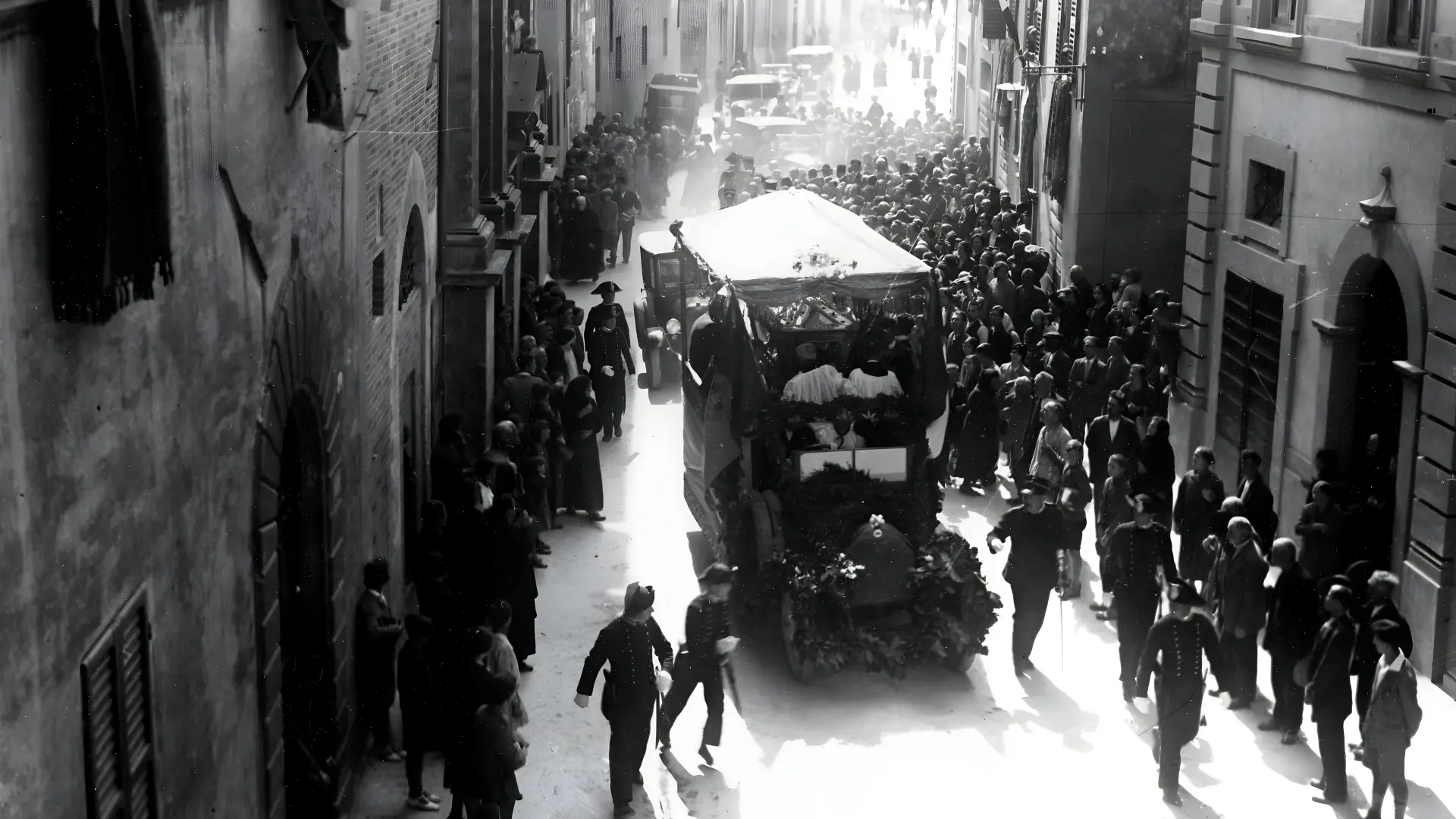
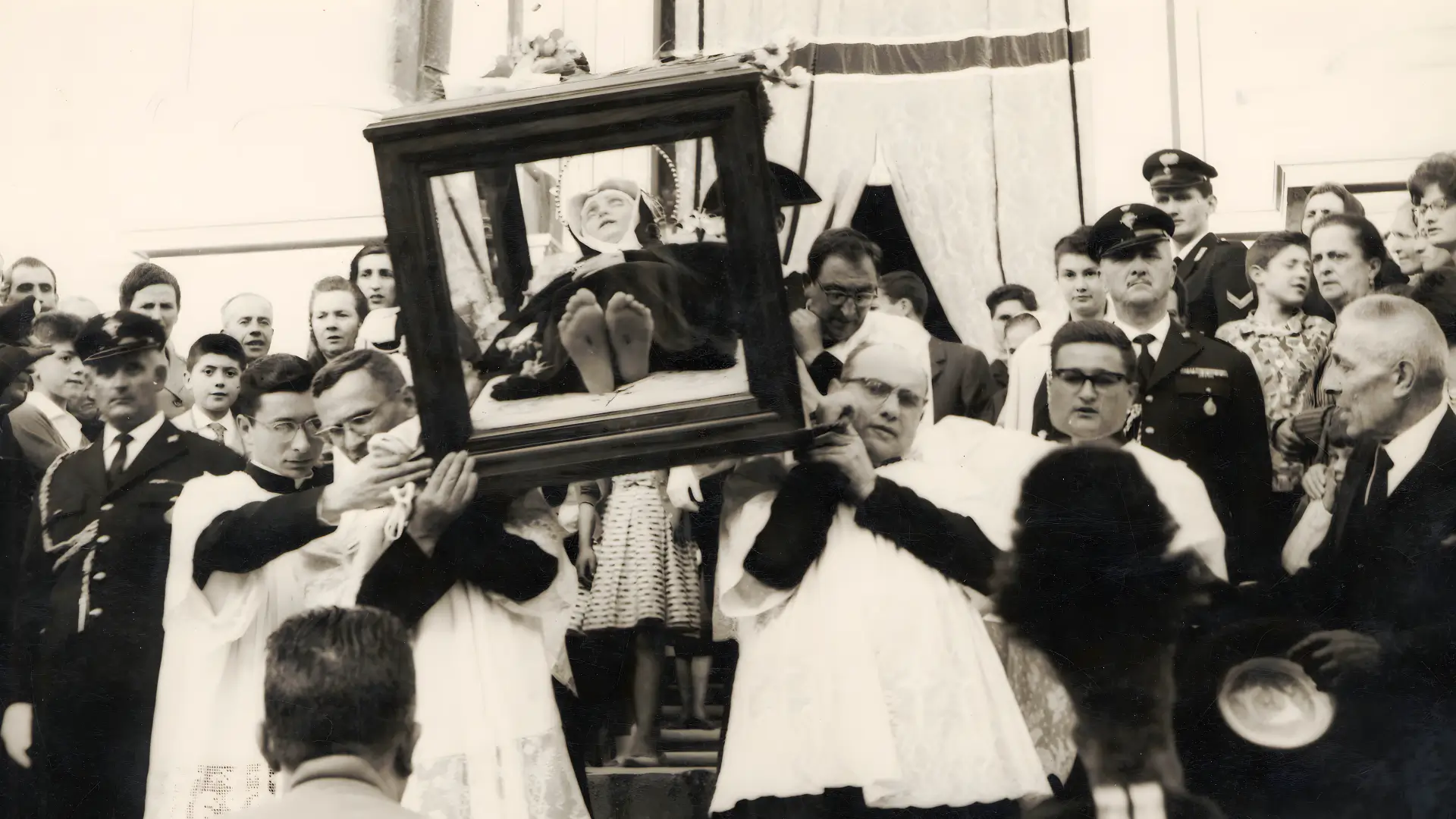
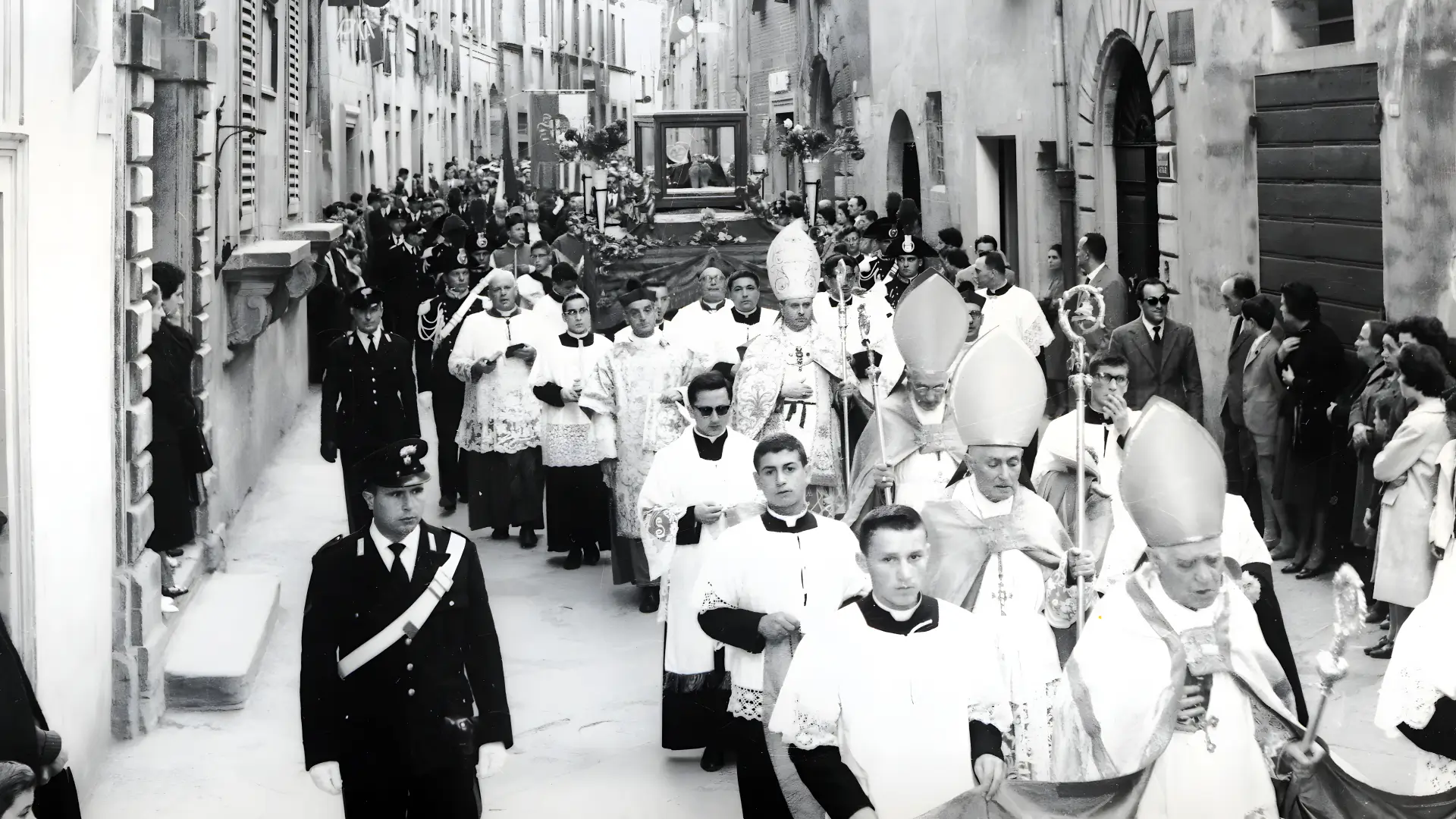
As early as 1927, on the bicentenary of her death, the Upper Tiber Valley hosted solemn celebrations that saw the Saint’s symbolic return to Mercatello sul Metauro. Later, in 1960, to mark the third centenary of her birth, a historic peregrinatio (pilgrimage) of her urn took place, passing through numerous dioceses across Umbria, Marche, and Tuscany, welcomed by vast crowds lining the streets to greet the passage of the “Saint Veronica processional car.” These events are far more than mere parades; they are moments of spiritual awakening. In 1977, for instance, the celebrations led to the founding of a new parish in her honor and the establishment of the Study Center, dedicated to deepening the understanding of her complex doctrine.
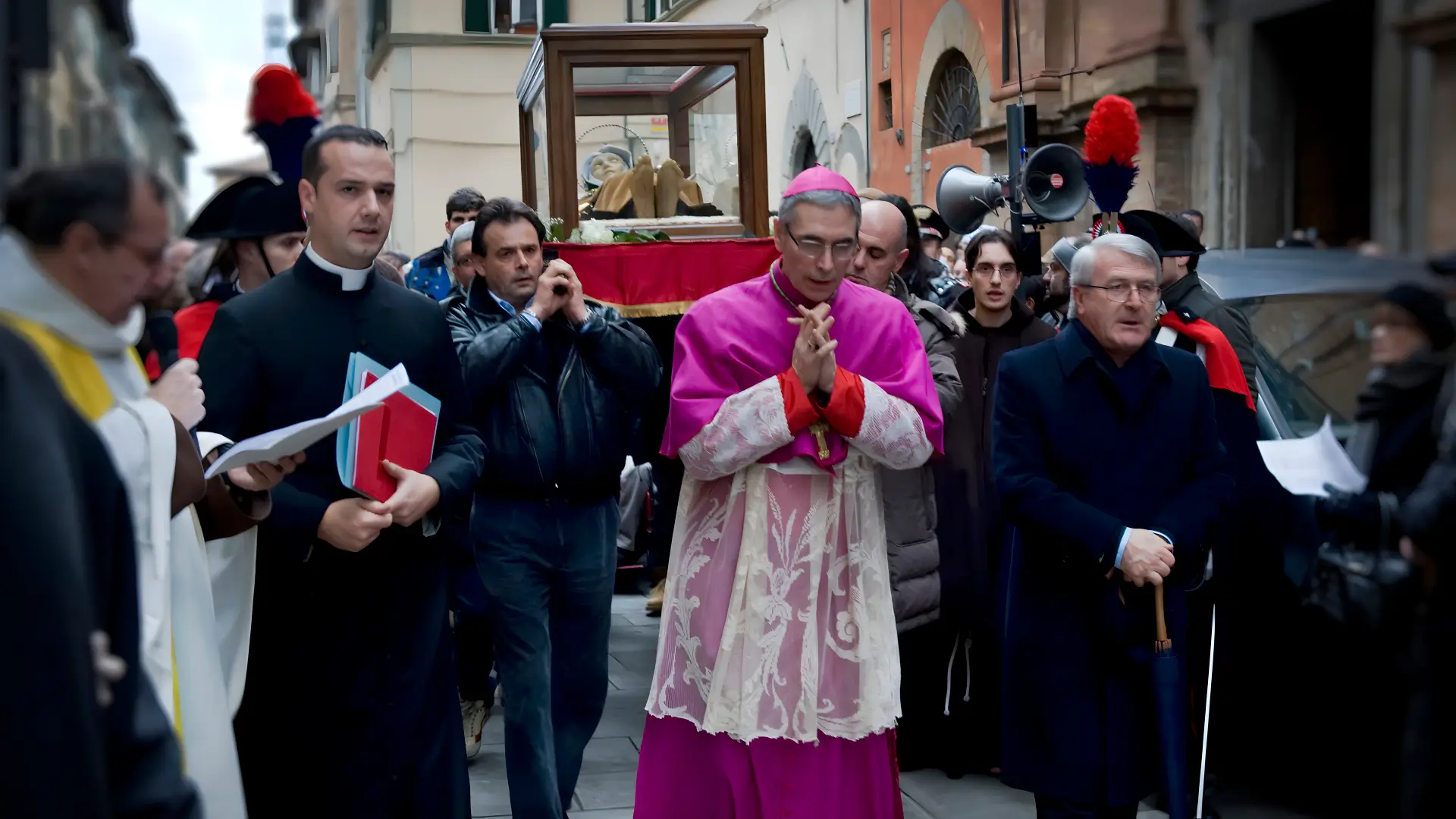
Every centenary dedicated to her is therefore an opportunity for renewal. In 1997, the tricentenary of her stigmata drew attention to the “tragic sentiment” of religious experience, bringing discussions on mysticism even into university lecture halls. More recently, in 2010-2011, Pope Benedict XVI inaugurated the Jubilee Year for the 350th anniversary of her birth with a masterful catechesis.
To celebrate today is to join this tradition of grace, allowing the Saint’s body—enshrined beneath the high altar of the monastery church—to continue speaking to the hearts of pilgrims through the witness of those who still follow in her footsteps today.
The unbreakable bond: Saint Veronica and the Order of Capuchin Poor Clares
Within the vast Franciscan family, the figure of Saint Veronica Giuliani holds a position of absolute prominence. She is, in fact, the only nun of the Order of Capuchin Poor Clares to have been canonized—a distinction that makes her the standard-bearer and the ultimate model for this specific cloistered vocation. The bond between Veronica and her Order is not merely formal or institutional; it is profoundly spiritual and charismatic.
In her mystical experience, a central place is held by Saint Francis of Assisi and Saint Clare, whom she affectionately called “Holy Father” and “Holy Mother.” Her relationship with them was almost tangible: each year, on the feast days of the two founders, Veronica would receive extraordinary graces, feeling their constant guidance throughout her journey of self-emptying and conformation to Christ. Even her approach to creation, documented across thousands of written pages, reflects a quintessentially Franciscan soul—one capable of discerning divine action in every element of nature, drawing the entire universe into her dialogue of love with God.
Devotion to her is so deeply rooted that there is hardly a friary or monastery of Capuchin nuns where a painting or statue of her cannot be found. Alongside Saint Francis and Saint Pio of Pietrelcina, Veronica is considered one of the three “stigmatized pillars” of the Capuchin family. This triad of saints, marked by the wounds of Christ, highlights a specific vocation of the Order: to act as mediators between God and humanity through participation in redemptive suffering.
The connection with both the male and female branches of the Order remains vibrant today, as evidenced by the ongoing collaboration between the Capuchin Friars Minor and the nuns in promoting knowledge of the Saint throughout the world.
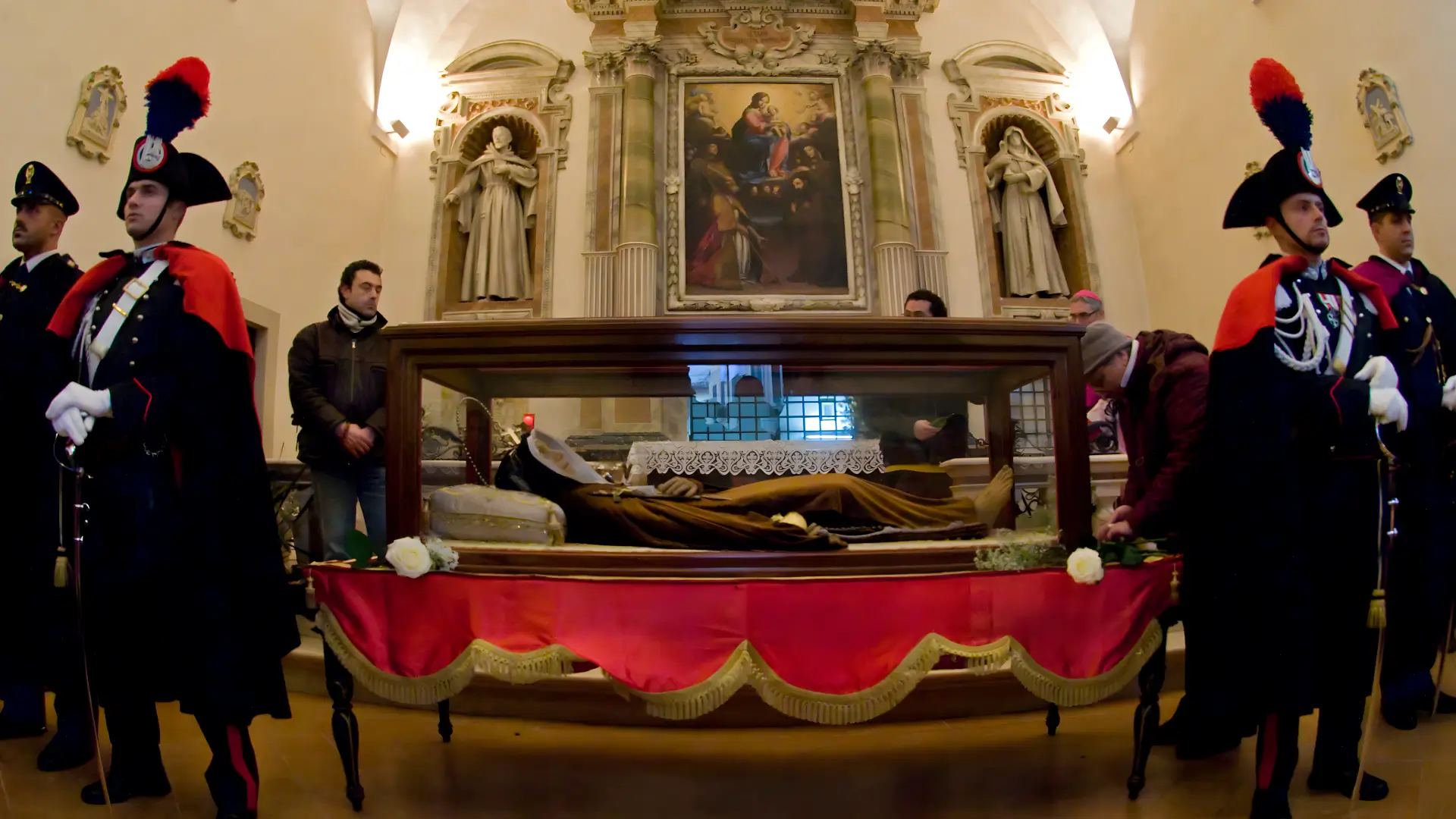
Rediscovering the legacy of the Saint
At the end of this journey through the story of Saint Veronica Giuliani and the significance of her centenaries, it is clear that her legacy is no mere museum piece, but a spring of living water.
The Foundation and the Monastery that carry her mission forward today invite us not to remain mere spectators of history, but to become pilgrims toward the Heart of God. Rediscovering Saint Veronica means encountering a woman who succeeded in weaving a profound spiritual life together with an admirable, everyday practicality. This centenary is the ideal moment to draw near to her writings, visit the places of her enclosure, and be challenged by her radical witness.
Whether you are a historian, a seeker of spirituality, or a simple devotee, Veronica’s message remains a universal cry of hope: Love exists, He has allowed Himself to be found, and He desires to hold every person close in endless happiness.
We invite you, therefore, to take an active part in this time of grace, rediscovering through the memory of this Saint the path to making God the center of our lives once more.
With the 5XMille donation in the annual tax return it is possible to concretely support the Foundation’s activity. Enter the tax code of the Santa Veronica Giuliani Foundation E.T.S. 90032180540 in the appropriate space on the tax return.
