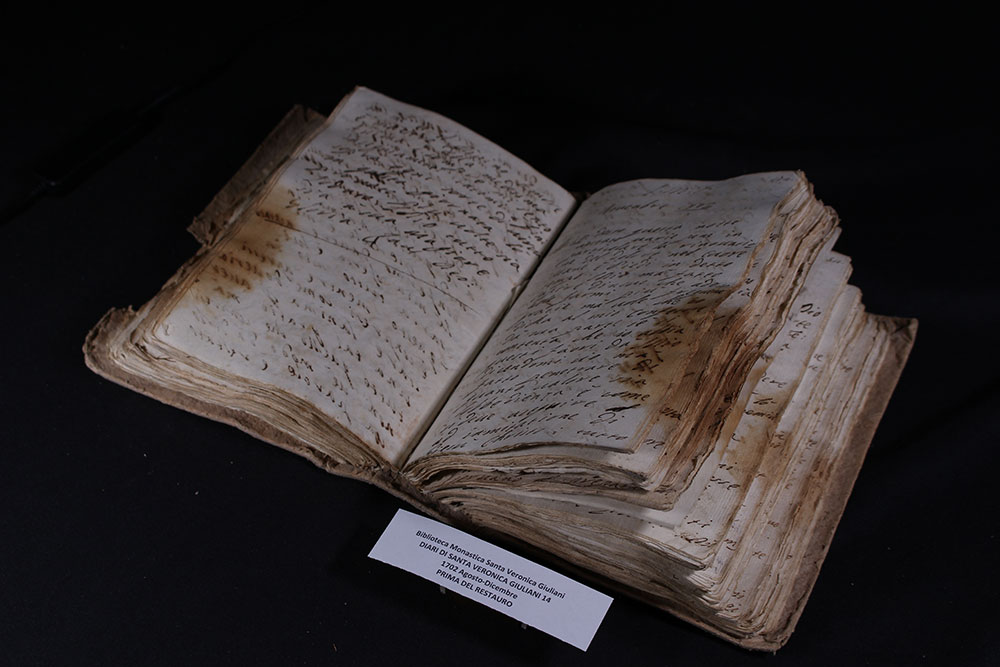
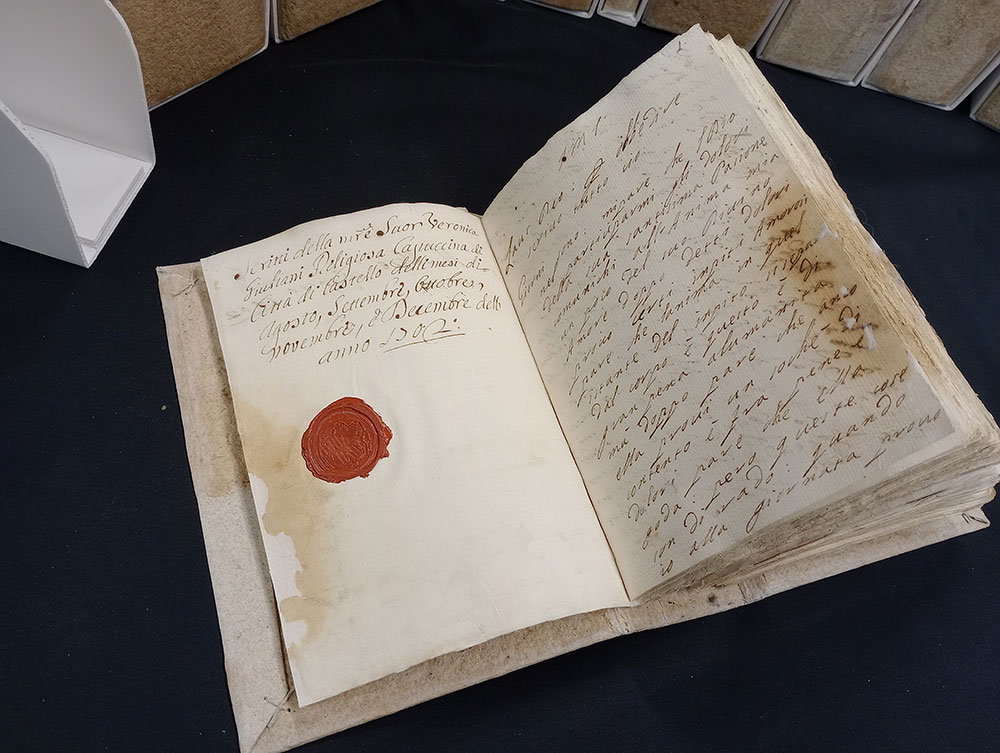
Historical memory is not an abstract concept; it is nourished by matter—by ink, parchment, and the tireless care of those who shoulder the burden of preserving it. In the heart of the Capuchin Poor Clares Monastery in Città di Castello, an endeavor of extraordinary value is underway: a restoration project that goes far beyond mere technical preservation.
The diary of Saint Veronica Giuliani, a monumental corpus of twenty-two thousand manuscript pages, is being brought back to life, allowing the world to draw once more upon a spiritual experience of profound depth.
This initiative, promoted directly by the Monastery and supported by funds from the CEI’s “8×1000” program for the preservation of the Church’s artistic and cultural heritage, represents a tangible bridge between the mysticism of the 18th century and contemporary sensibilities.
A Monumental Work: Why the Diary is One-of-a-Kind
To understand the importance of this restoration, one must look at the very nature of the writings of Saint Veronica. We are not dealing with a literary work conceived for the public or for personal glory. When, in April 1693, the Saint’s confessor, the Oratorian father Girolamo Bastianelli, ordered her to write down the graces she received from the Lord, Veronica felt an instinctive and profound reluctance.
The Saint, who was not yet thirty-three years old at the time and in the prime of her vitality, would have preferred to keep her mystical experiences silent. Writing was not a stylistic exercise for her, but an act of pure obedience—an additional sacrifice she added to her harsh nocturnal penances.
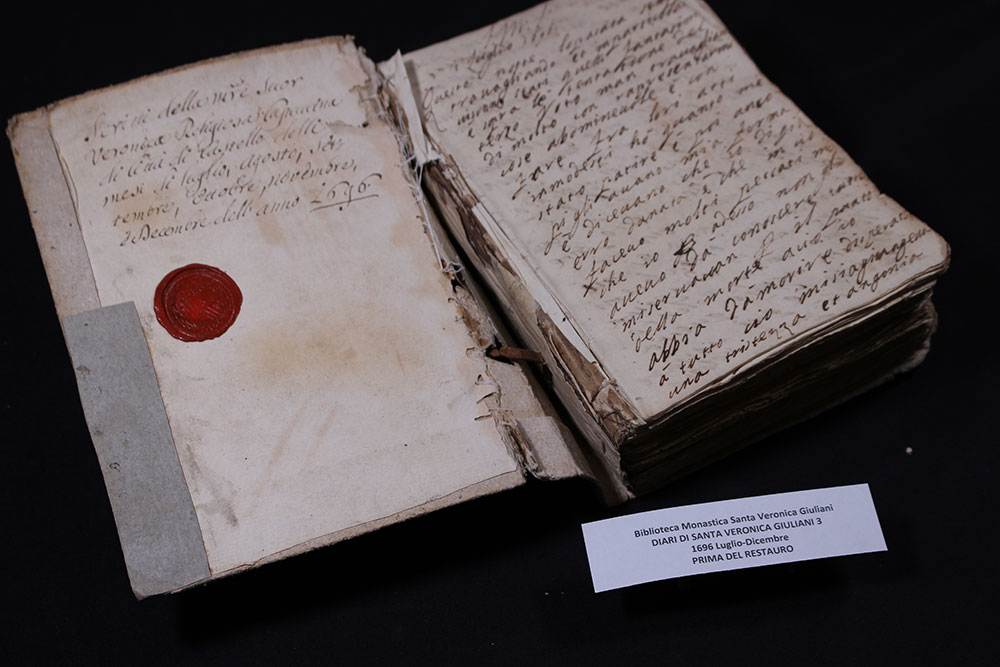
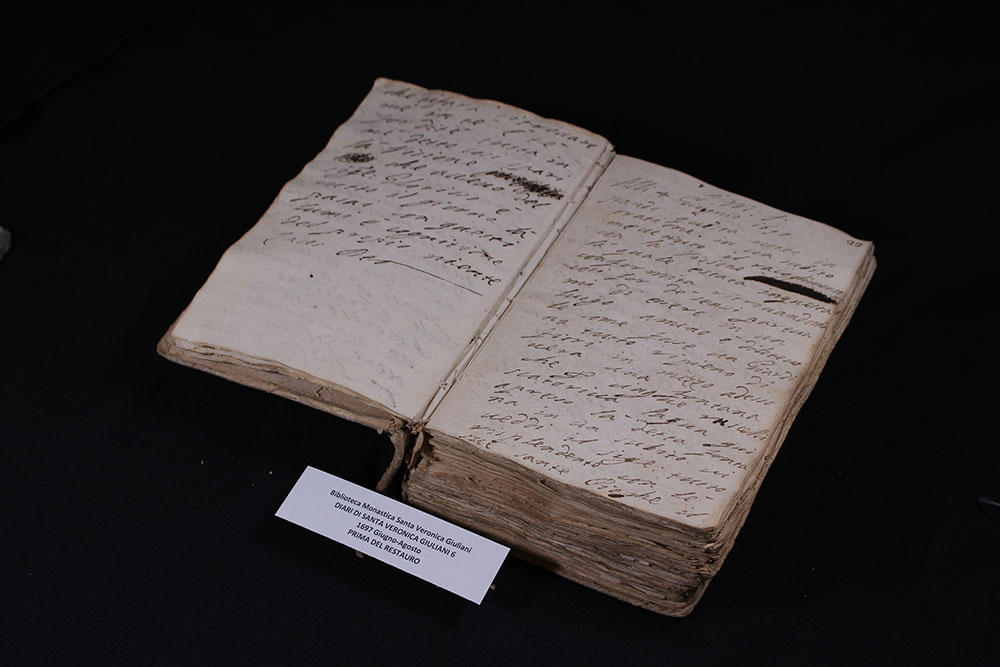
The diary is an unparalleled primary source for understanding the spiritual personality of this mystic. It consists of thirty-six autograph volumes that cover, with only brief interruptions, a span of thirty-four years of cloistered life.
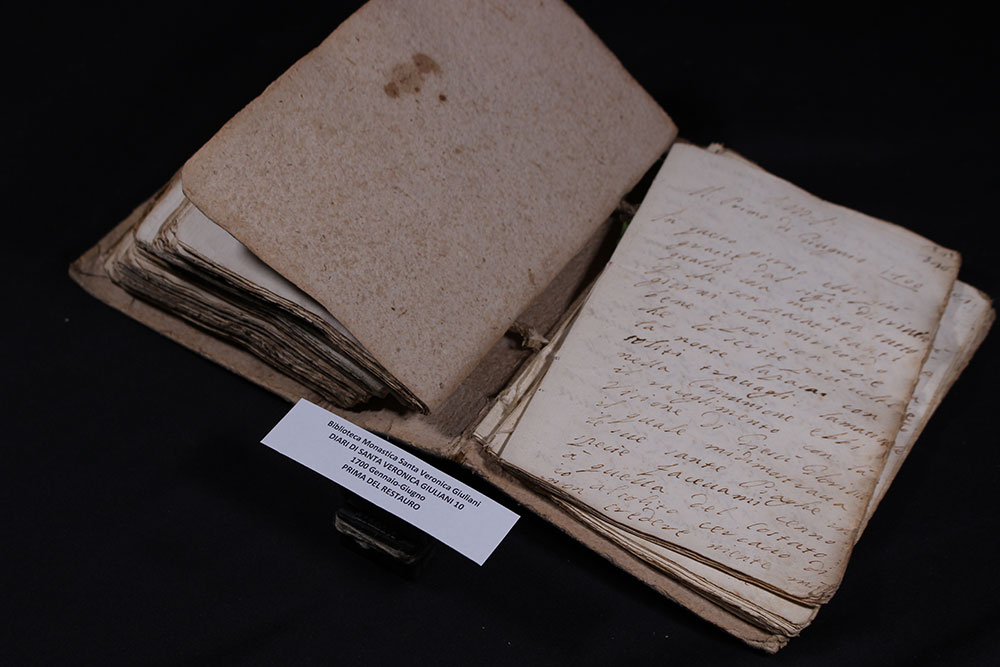
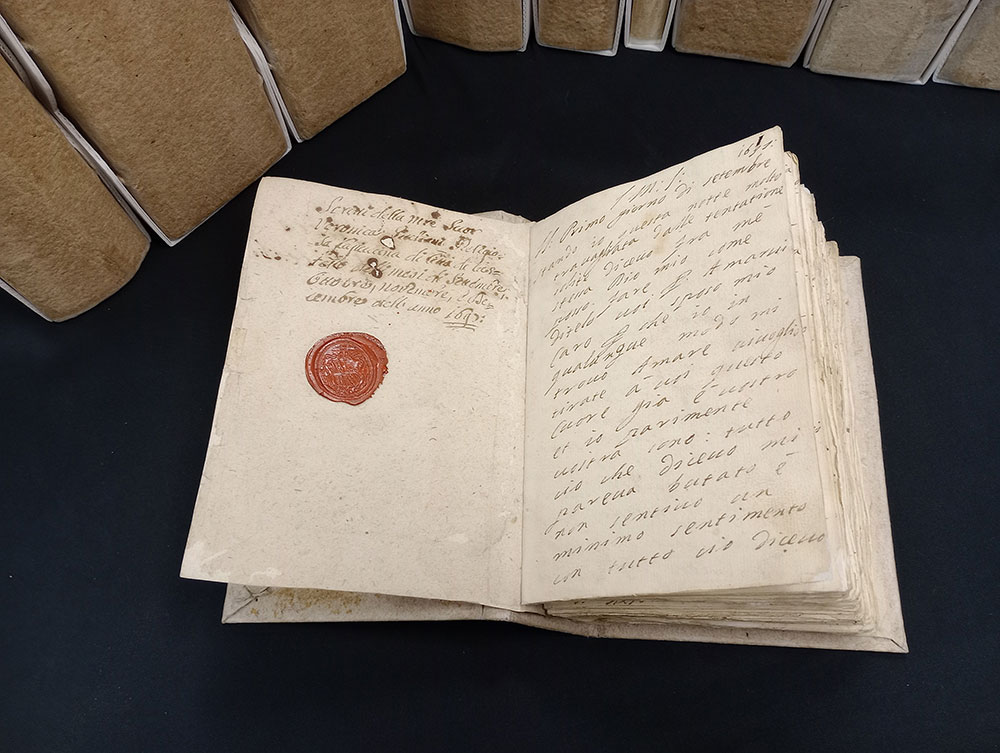
The writing flows spontaneously and continuously, lacking erasures, corrections, punctuation, or predetermined chapter divisions. It is the raw, unvarnished testimony of a soul “striving toward the Lord,” written at night by candlelight while the rest of the world slept.
Although the Saint did not possess an extensive cultural background upon entering the monastery, her passionate reading of spiritual texts in the convent library provided her with the precise vocabulary needed to translate her ineffable visions, albeit by approximation. The writings of Saint Veronica are therefore the document of a battle against the “old man” and an absolute dedication to the Beloved. Restoring these volumes means protecting the beating heart of a sanctity that made “suffering” its primary weapon of defense and dialogue with God its reason for being.
Conservation Restoration Techniques for 18th-Century Manuscripts
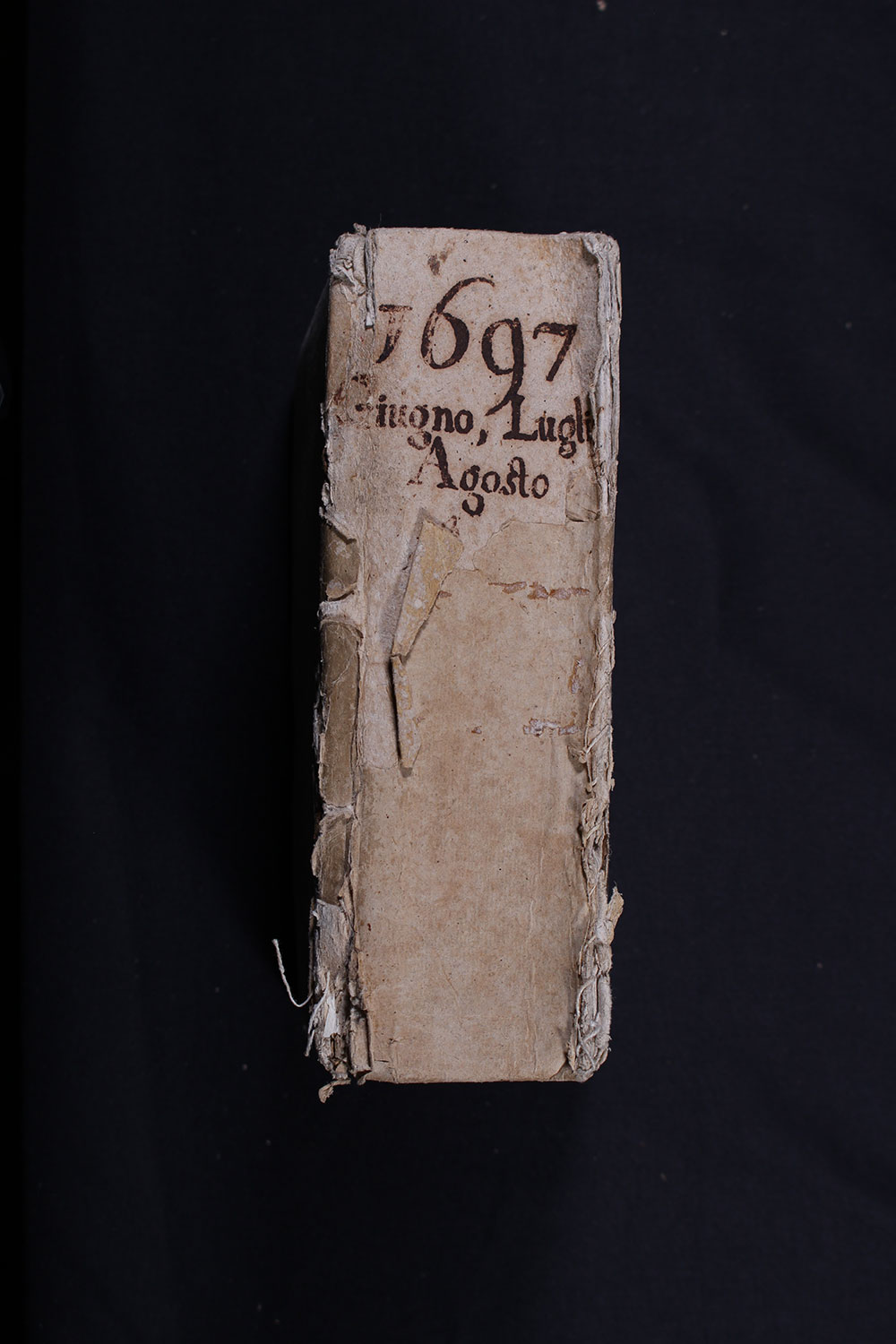
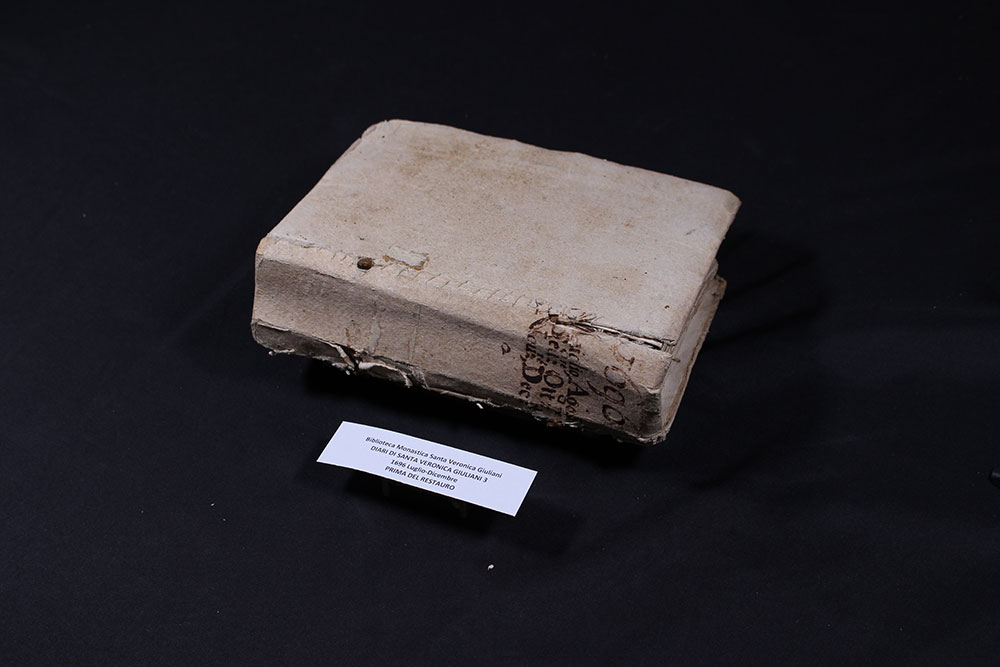
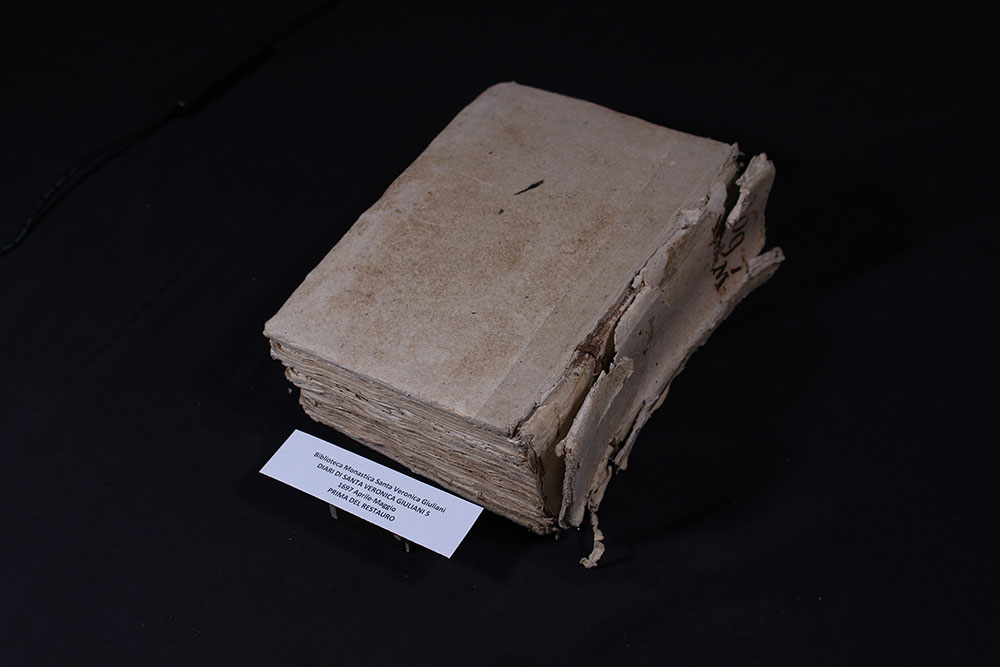
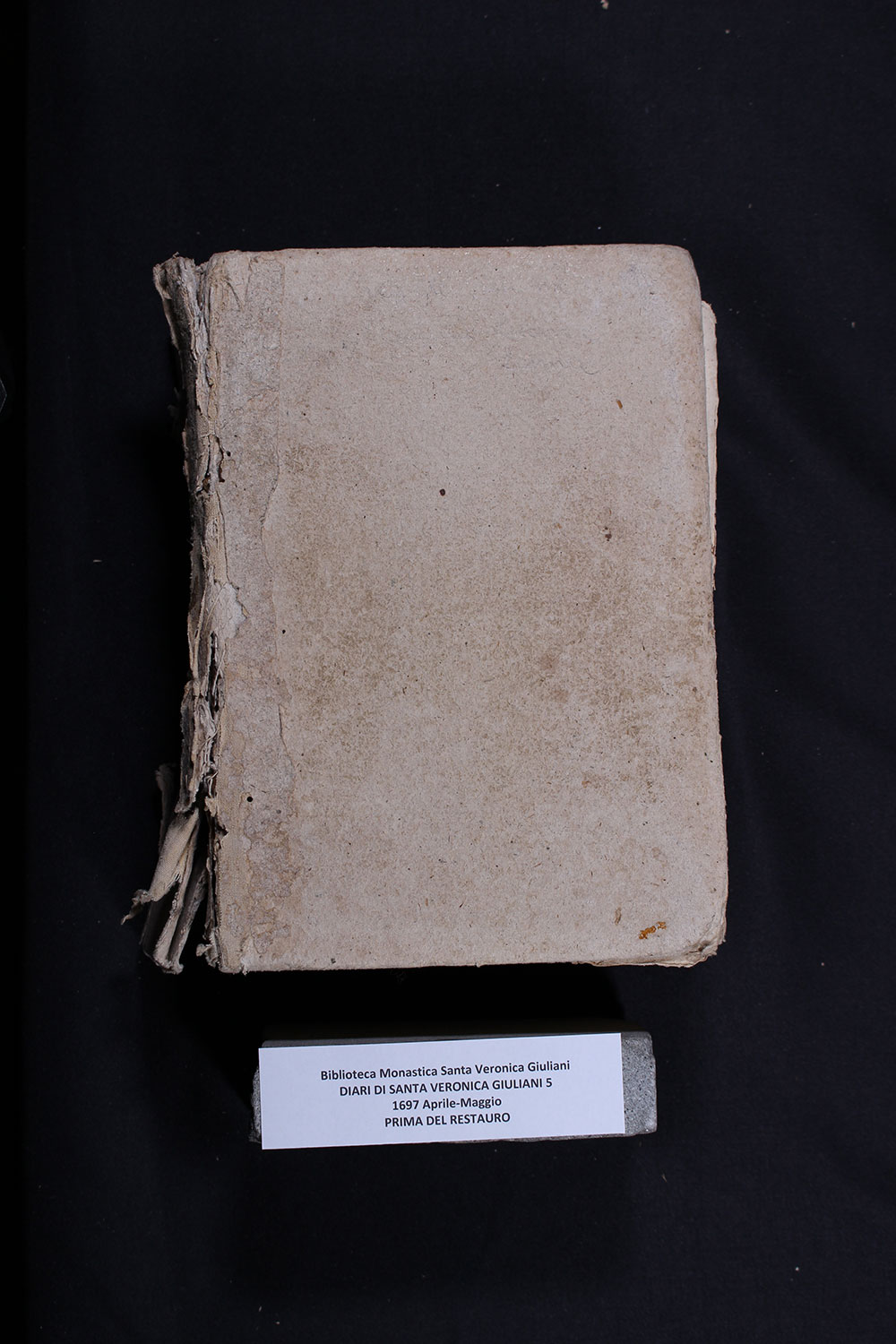
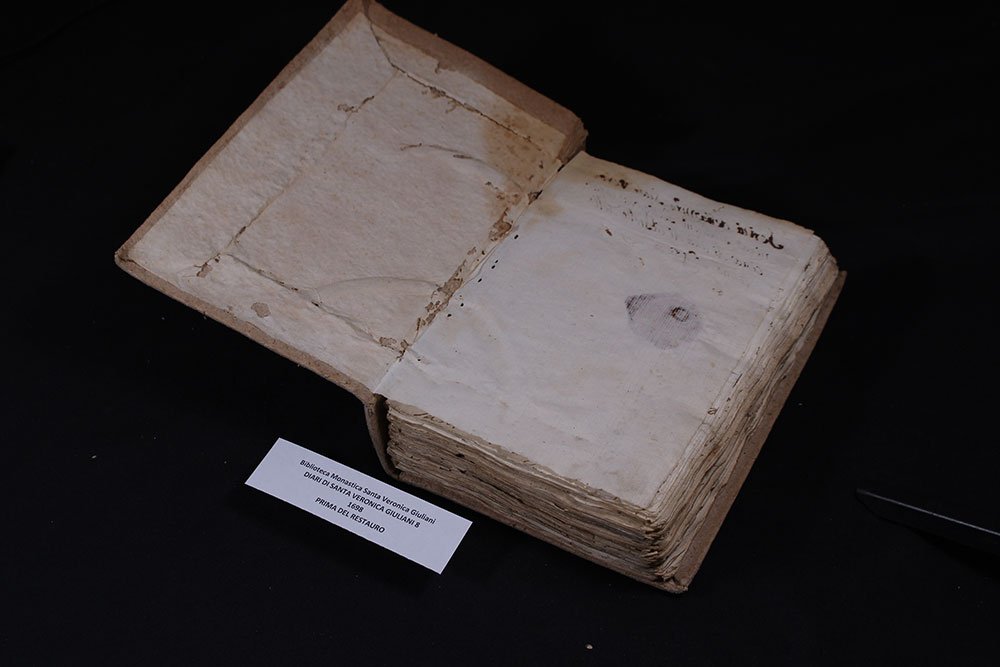
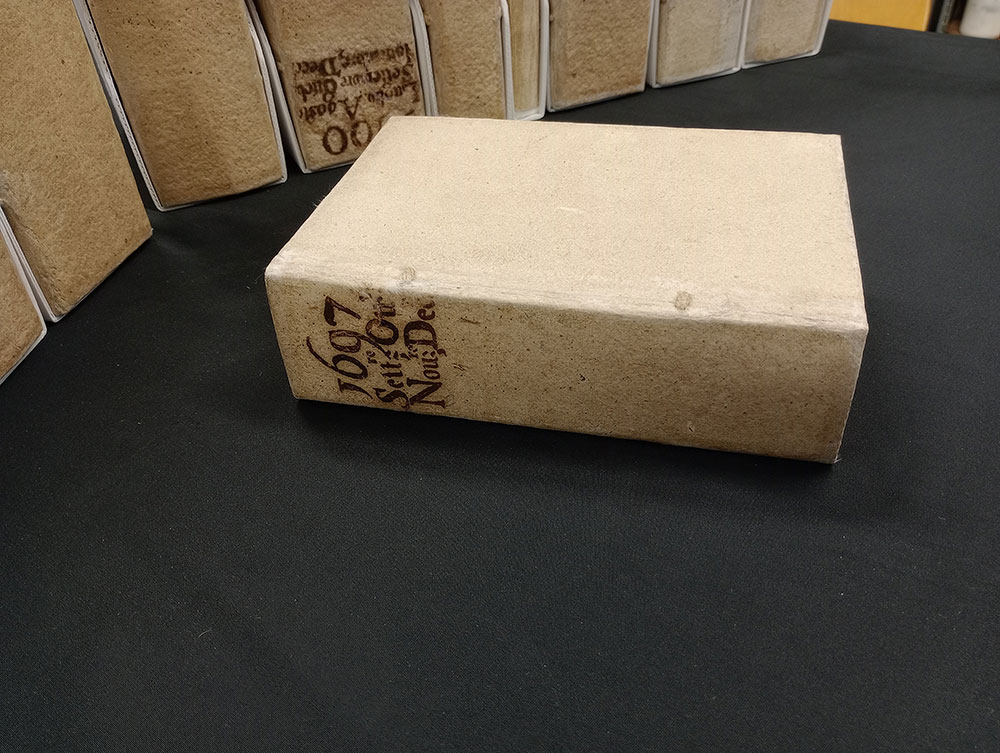
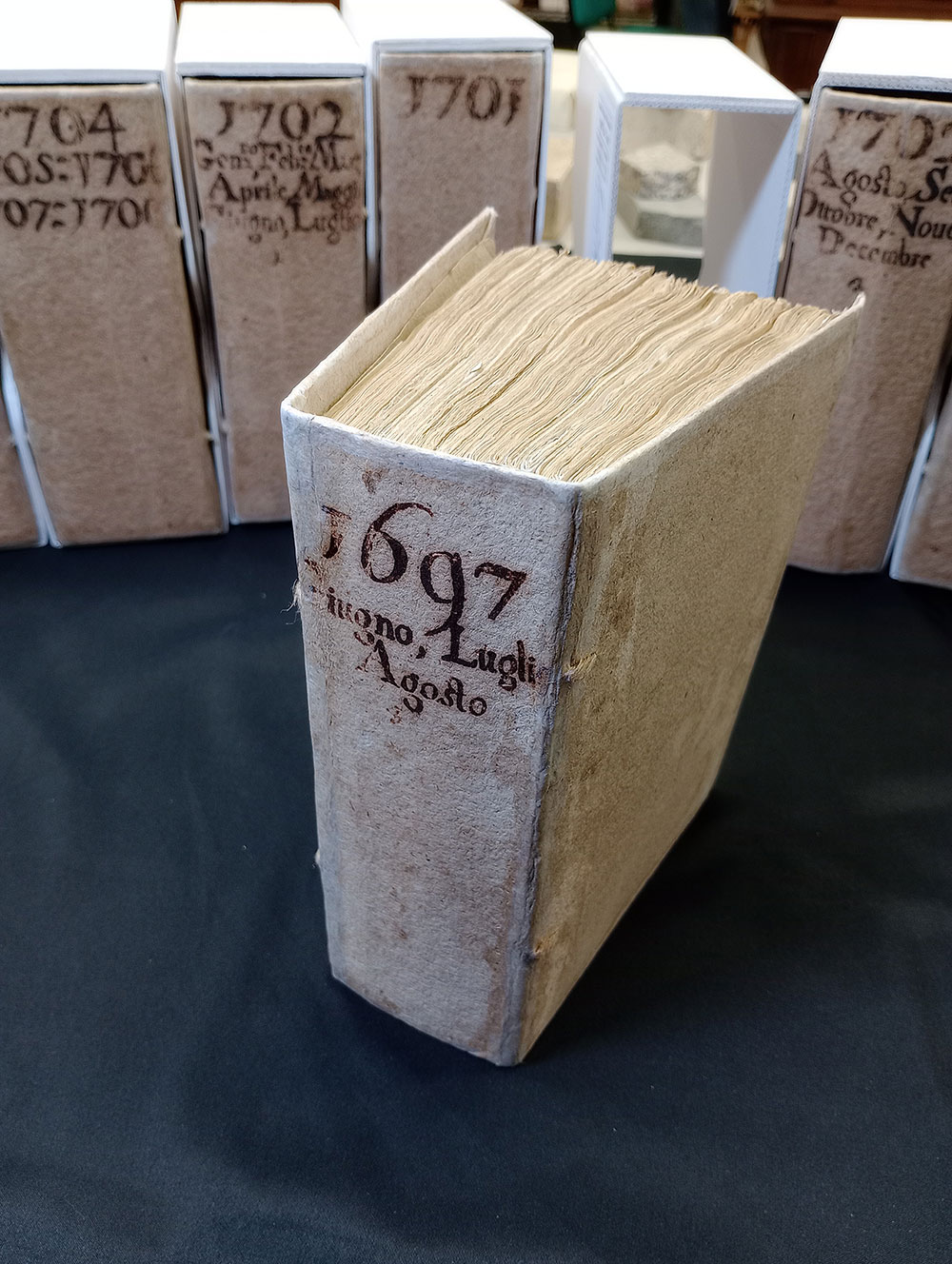
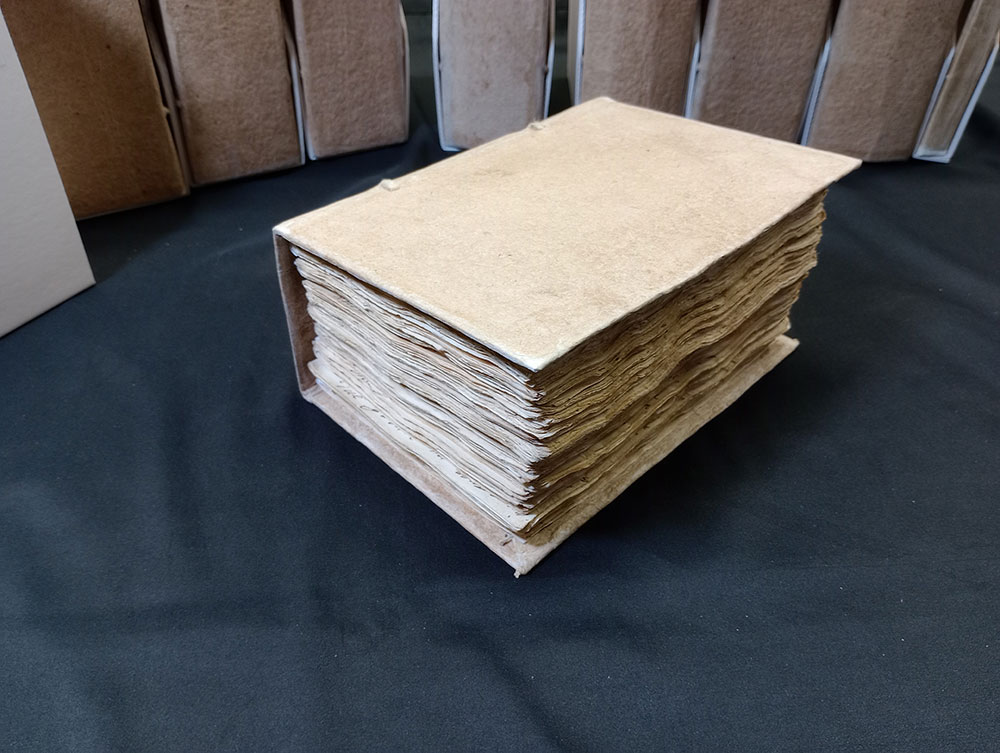
The recovery of the 36 volumes—17 bound in form-cardboard with through-cords and 19 in full semi-rigid parchment—required an extremely high level of technical expertise. The project, entrusted to Stefano Mastriforti’s Memorie di Carta Laboratory, has already completed the restoration of the first 17 volumes, which were returned to the monastic community at the end of September. The applied methodology reflects the most rigorous standards of contemporary conservation.
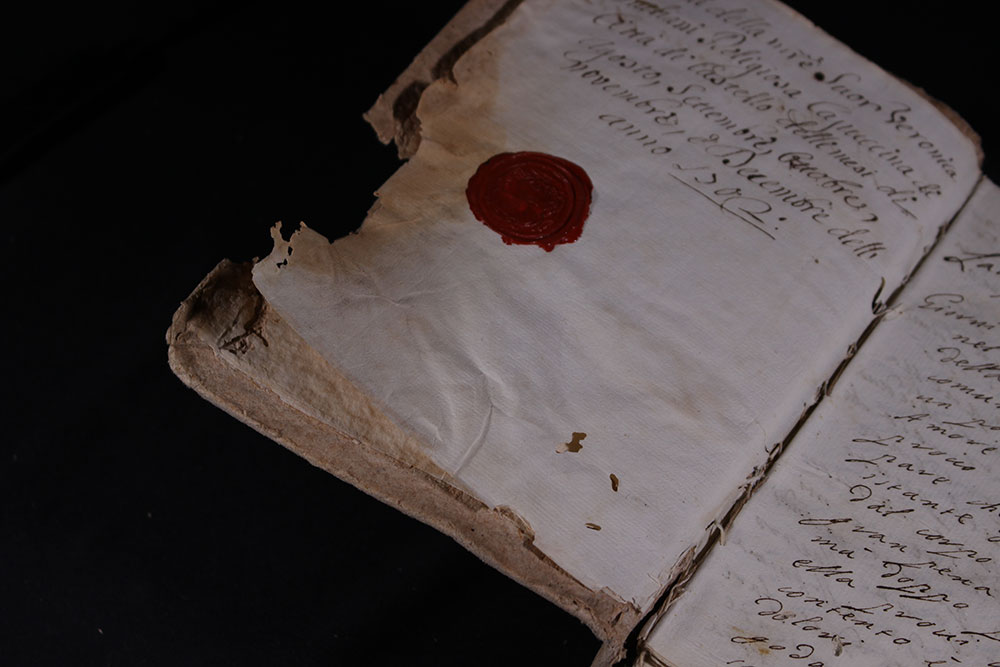
Each volume underwent thorough photographic documentation before being dismantled and unstitched, with particular attention paid to the endpapers, several of which contained authentic episcopal seals in sealing wax.
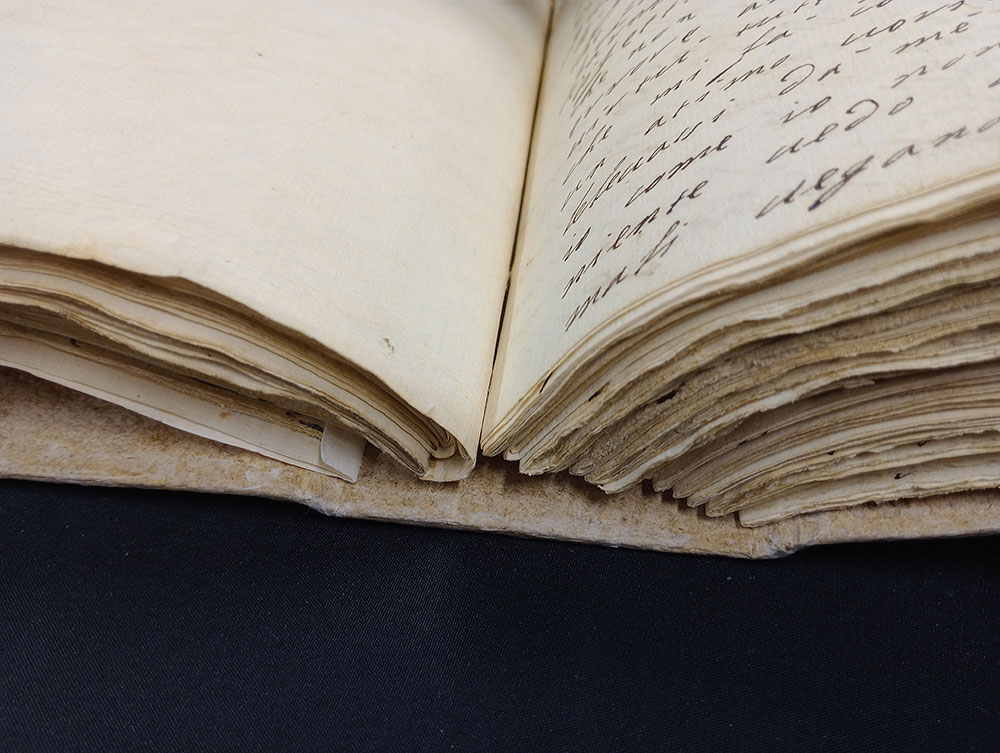
Following an initial dry cleaning, the treatment proceeded with wet processing. The fascicles were washed in warm water by immersion and subjected to deacidification, a critical step to halt the chemical degradation caused by time and the nature of the iron-gall inks frequently used in that era. Subsequently, the pages were sized and reinforced to fill lacunae using Japanese paper—a noble material chosen for its lightness and strength, ideal for repairing ancient supports without weighing down the page structure.
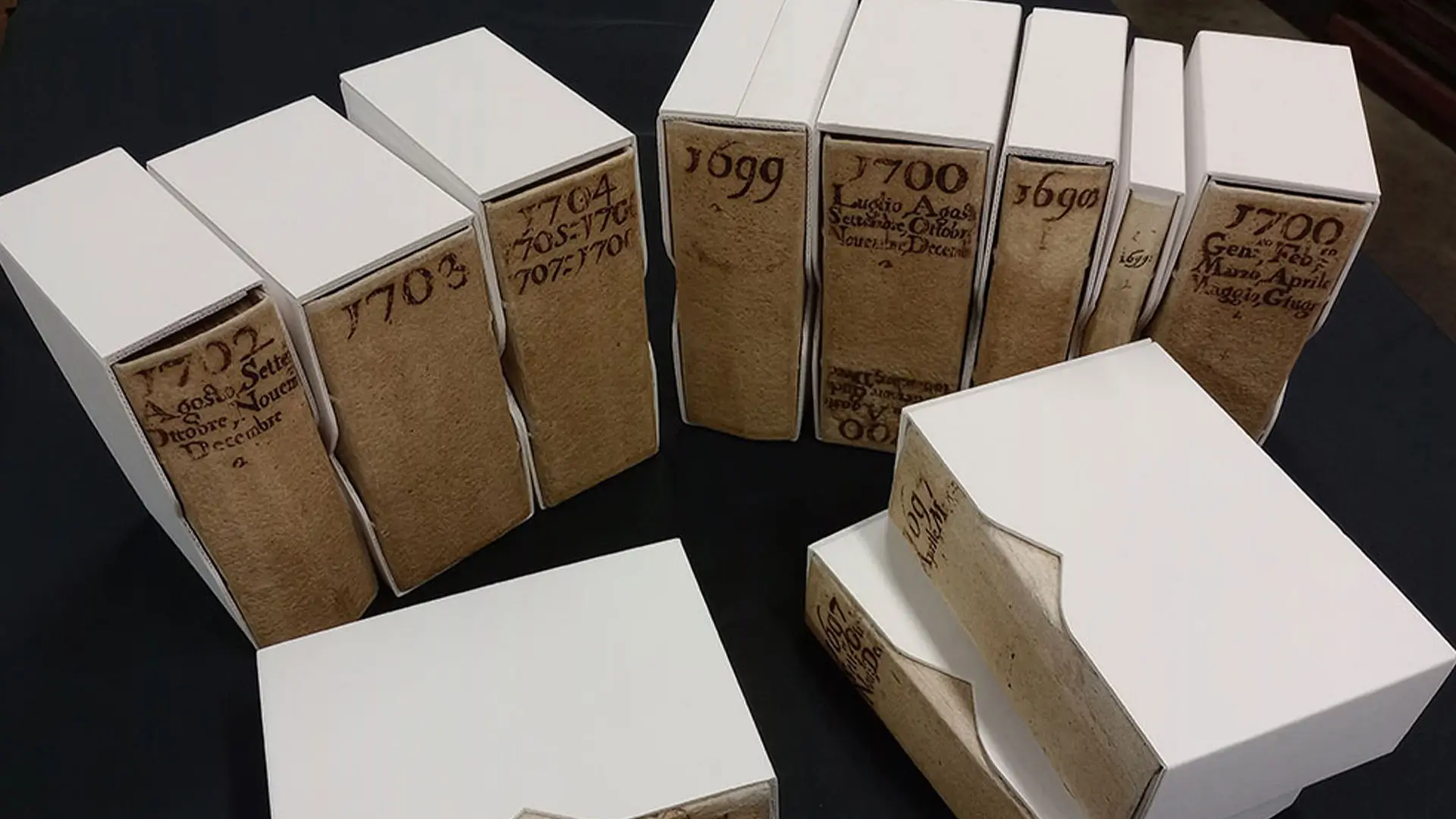
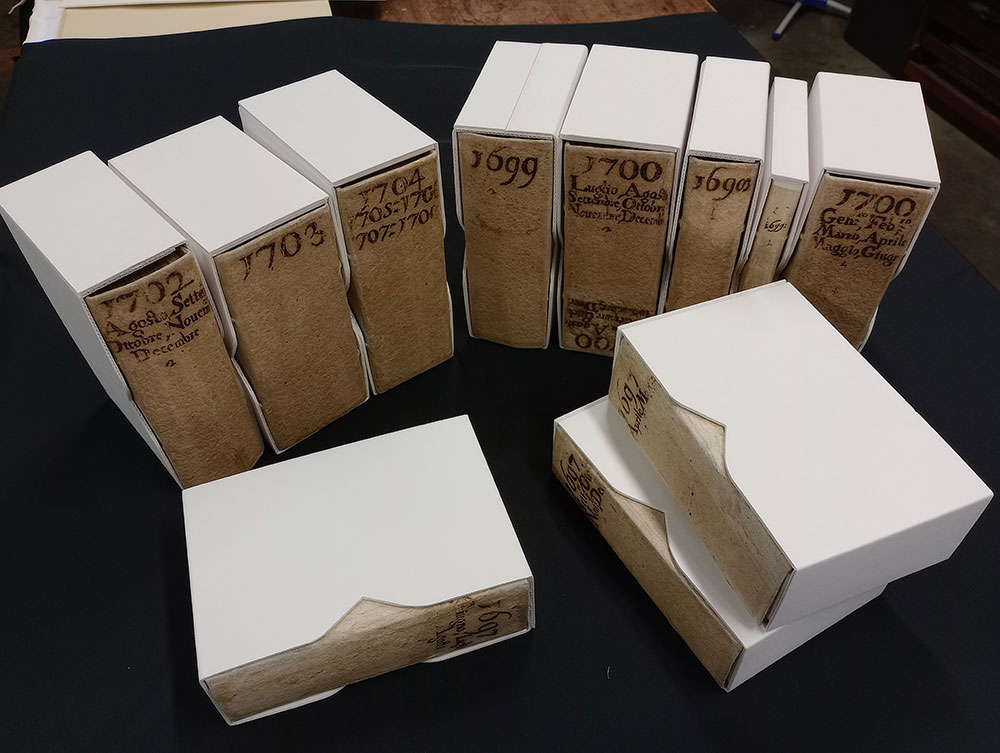
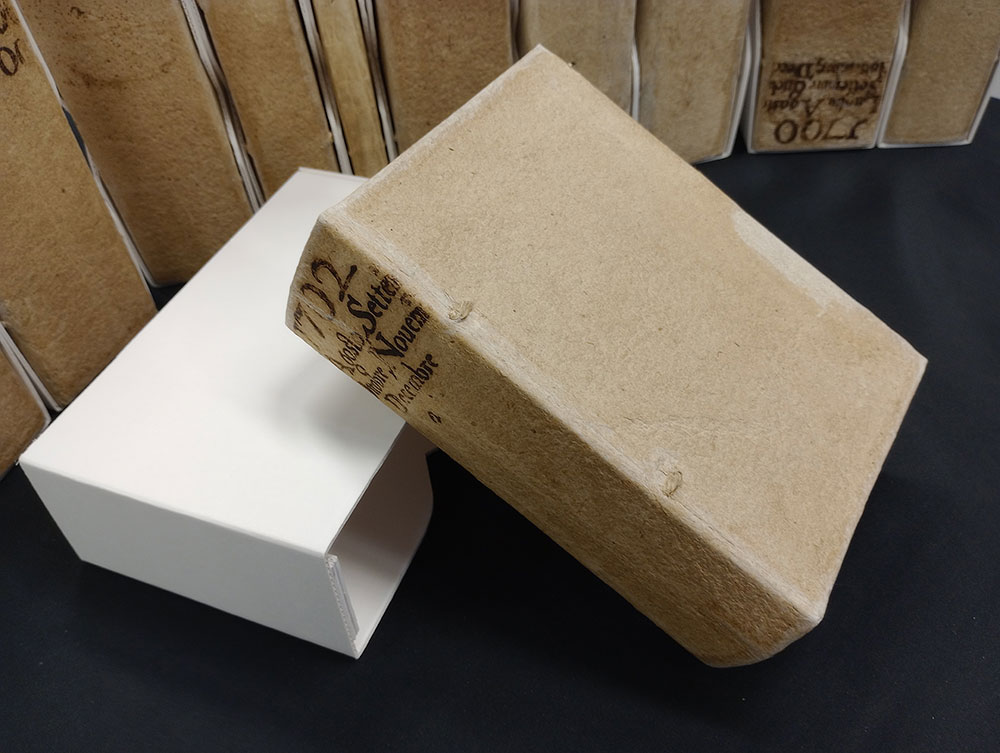
The original covers were treated similarly, lined with Japanese paper, and repaired using the “leaf casting” technique, a process that allows for the precise reintegration of parchment or cardboard losses. The volumes were then resewn onto single twine cords to ensure proper flexibility of the spine. Finally, to protect this treasure, each volume was housed within protective acid-free micro-flute cardboard enclosures, creating a microclimate shielded from external agents.
From Paper to Digital: The Digitization of Memory
The recovery of the diary of Saint Veronica Giuliani does not end with the physicality of the paper. The Monastery’s goal, in anticipation of 2027—the three-hundredth anniversary of the Saint’s death—is to ensure that the richness of these thoughts can reach every scholar or believer, regardless of their physical proximity to Città di Castello. The digitization of memory is the natural frontier of this conservation effort.
Thanks to the restoration, the pages have been stabilized, allowing for high-definition scanning that will prevent the need for future, wear-inducing consultation of the originals. The work of Stefano Mastriforti and his team has not only saved the paper but has restored legibility to a text that, without this timely intervention, would have risked irreversible oblivion. Discoveries made during the dismantling of the volumes have already provided new research perspectives, confirming that the Saint’s life and mystical path still hold much to be revealed to posterity.
The Importance of Supporting the Recovery of Archival Heritage
The commitment shown by the Monastery for the recovery of all volumes, including the book of memoirs by Ubaldo Antonio Cappelletti and the Processus recognitionis cadaveris et cordis, stands as a lesson for contemporary culture.
Supporting the restoration of an archive does not just mean looking to the past; it means defending the spiritual and cultural identity of a community that has managed, over the centuries, to safeguard a unique voice. In 2026, the laboratory will proceed with the restoration of the remaining 19 volumes.
Every donation and every bit of attention directed toward this project is a brick in the wall built against oblivion. The story of Veronica Giuliani, a woman of courage and ardent faith, lives in these pages; their restoration is an act of love that allows this voice to continue resonating for anyone who, even today, wishes to draw near to the Love she sought so intensely and found in the silence of the night. The Church’s heritage is a common good, and the care dedicated to the diary of Saint Veronica Giuliani is its most luminous proof.